Last week I was walking with a friend at Emmarentia Dam. The weather was idyllic for late summer, with not a whisper of wind, allowing a perfect reflection of the trees and sky in the water. This set me thinking, what is it in nature that gives us this sense of immense calm, and what can we learn from this as designers?
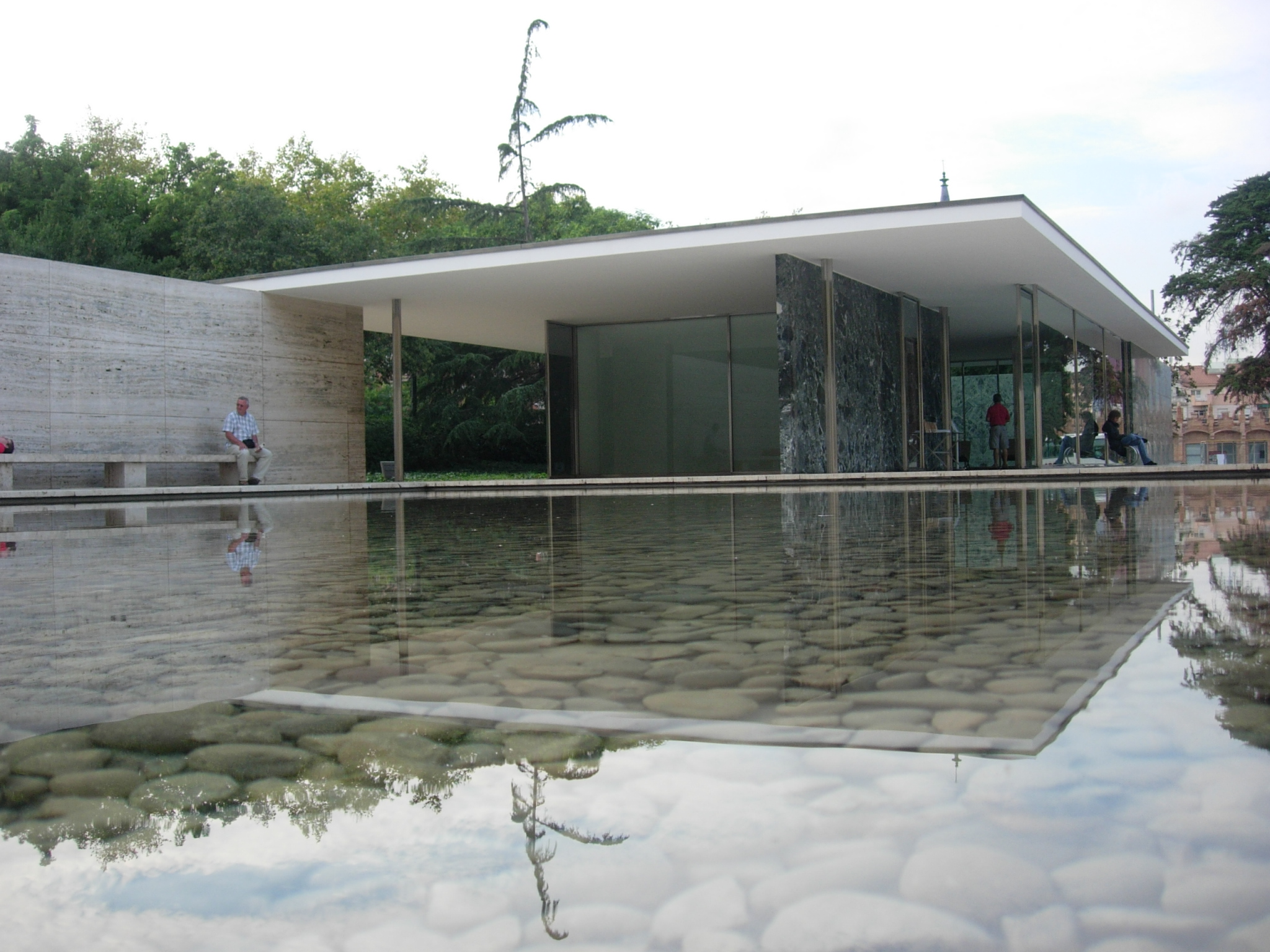
The most obvious parallel in architecture is in the use of reflecting pools, which have been used by some of the best-known modernists, including le Corbusier and Mies van der Rohe, often creating a contrast between the asymmetrical composition of the building volumes and the symmetry of the reflection.
| This technique is used extensively by Oscar Niemeyer in Brasilia, enlivening the bold volumes and strikingly sculptural concrete structural elements. This adds to the drama of the asymmetrical forms and the play of light and shadow with the deeply recessed envelope of the building against the bright white of the repeated rhythm of supports. | |||
|


 |
| Living room with a series of thin strip mirrors |
 |
| Repetition of a distinctive feature in an open-plan space |
For domestic design, reflecting pools are seldom practical, using up valuable space and separating the building from the garden. They are also quite a technical nightmare, as they need particular care with waterproofing a body of water right next to the house. Also, the most effective use of a reflecting pool is in a place where one can stand quite a distance away from it, to get the full benefit of the visual effect.
So a simpler and much less expensive option for using the benefits of reflected light is to use mirrors, not so much to be able to see ourselves, but more to modulate or unify spaces. In previous blogs, I have spoken about using a mirror to make a space seem larger. But mirrors can be extremely versatile, if used strategically.
Open-plan spaces can become quite amorphous - a carefully placed mirror can be used to capture features in other parts of the space. In the photo above, the zig-zag wall in the living area is repeated in the reflection of the mirror in the dining area, giving a unifying effect.
My personal favourite for mirror placement is in the corner of a room - here it helps to dematerialise and enliven a boring room, without taking centre-stage. One of the things to avoid is placing a mirror directly in the line of sight of any of the chairs in your house, as your guests may feel quite self-conscious staring at themselves for an entire dinner! Likewise, it may not be the best idea to have a full-length mirror in your entrance hall - while this may be very useful to yourself for that final check before you leave home in the morning, your guests may find it most uncomfortable to see themselves as the first experience of your home.
Comments
Post a Comment